Our journey to
TE TAI O POUTINI
TE TAI O POUTINI



The story of Ngāti Waewae is carried through whakapapa, migration, pounamu, conflict, settlement, loss, resilience and the enduring responsibility to keep the home fires burning on Te Tai o Poutini.
Ancestral origins
Ngāi Tahu whakapapa begins across the Pacific with Hawaiki, the ancestral homeland remembered in Māori tradition.
Hawaiki refers to the wider Polynesian homeland of Māori ancestors, often associated with islands of eastern Polynesia. It is not understood as one fixed modern country, but as a place carried through whakapapa, migration stories and ancestral memory.
Māori were the first people to settle mainland Aotearoa New Zealand. Moriori are the Indigenous people of Rēkohu / the Chatham Islands, with their own distinct identity, history and mana.
Ngāi Tahu identity traces back to Paikea, who came from Hawaiki, and to his descendant Tahupōtiki, the ancestor from whom Ngāi Tahu takes its name.
For Ngāti Waewae, this is the beginning of a much wider journey, from Hawaiki, across the Pacific, to Aotearoa, to Te Waipounamu, and finally to Te Tai o Poutini.
c. 1600s - 1700s
Ngāi Tahu are “the people of Tahu.” The name comes from our ancestor Tahupōtiki, often shortened to Tahu.
The descendants of Tahupōtiki first lived in the North Island. Over generations, some moved south, eventually crossing Raukawamoana / Cook Strait into Te Waipounamu, the South Island.
They came for many reasons: to follow whakapapa connections, form marriages and alliances, establish new settlements, respond to conflict, and access the resources of the South Island.
Te Waipounamu was already home to earlier peoples, including Waitaha and Ngāti Māmoe. Over time, through migration, marriage, alliance and conflict, these histories became woven together.
In simple terms: Ngāi Tahu did not arrive in Te Waipounamu in one single moment. Ngāi Tahu became established here over generations.
c. 1700s
The movement of Ngāi Tahu to Te Tai o Poutini, the West Coast, was closely connected to pounamu, the treasured greenstone found in the rivers and mountains of the region.
E ai ki te kōrero, according to tradition, a Ngāti Wairangi woman named Raureka left Arahura and crossed Kā Tiritiri o te Moana, the Southern Alps. On the eastern side of the mountains, she met Ngāi Tahu hunters and showed them a sharp adze made from pounamu. Ngāi Tahu saw the strength, beauty and value of this taonga, and Raureka showed them the route back across the mountains to its source. Paul Madgwick’s kōrero records that Ngāi Tahu first traded with Ngāti Wairangi for pounamu before later deciding to take control of it by force.
This route became one of the important Pounamu Pathways linking the east coast with Te Tai o Poutini. Pounamu was carried by foot through river valleys, over the mountains and along the coast, connecting places such as Arahura, Māwhera, Taramakau and Kaiapoi.
This history helps explain why pounamu, Arahura, Māwhera and Te Tai o Poutini are so central to Ngāti Waewae identity today.
c. early - mid 1700s
Before Ngāi Tahu held mana whenua on Te Tai o Poutini, the Coast had been home to different iwi over many generations. One of these was Ngāti Wairangi, who became known for working and trading pounamu.
Pounamu changed everything. It was strong, beautiful and powerful, used for tools, weapons and taonga. In a stone-age world, it was one of the most valuable resources in Aotearoa.
As Ngāi Tahu interest in pounamu grew, so did conflict.
The battles moved across the Coast: Kokatahi, Lake Mahinapua, Kōtuku Whakaoka / Lake Brunner, and finally Paparoa. There were victories, losses and utu. At Lake Mahinapua, Ngāi Tahu suffered a devastating defeat. Later, Ngāi Tahu returned, scattered Ngāti Wairangi at Kōtuku Whakaoka, and the conflict ended near Paparoa.
The final war party from Canterbury was led by Tūhuru and other chiefs. But this was not only a fighting force, women and children travelled too. Which indicates that this was not just a raid, it was a move toward settlement.
Wāhine were central to this history. Moroiti, also known as Naki, was Tūhuru’s sister, a tohunga and spiritual adviser. Papakura, Tūhuru’s wife, was a fierce wahine toa who rallied the women. Their leadership is part of the strong mana wāhine line carried by Ngāti Waewae today.
This history was not only about battle. It was about pounamu, whakapapa, intermarriage, survival and settlement. What followed was the beginning of a permanent Ngāi Tahu presence on Te Tai o Poutini.
c. mid-late 1700s
After the final battle near Paparoa, Tūhuru and his people had a choice: return east to Canterbury or stay on Te Tai o Poutini and keep the fires burning.
They met at Rūnanga. No decision was made.
They crossed the Māwhera River to Ōmotumotu / Omoto. There, the decision was made: they would stay.
That decision created Poutini Ngāi Tahu, Ngāi Tahu of the West Coast.
Tūhuru and his people established themselves at Māwhera Pā, now Greymouth. This was not a small or symbolic site. The pā stretched from the present town centre toward the river and railway station area, surrounded by cultivations, forest, tidal creeks and rich mahinga kai food-gathering places. Today, the Greymouth CBD sits on top of this ancient pā.
From Māwhera, Poutini Ngāi Tahu put down roots across the Coast, at Kōtuku Whakaoka / Lake Brunner, Taramakau, Arahura, and later further south to Mahitahi and Makaawhio.
Māwhera Pā became a place of living, trading, food gathering, pounamu working and identity.
c. 1860s onwards
For generations, Māwhera Pā was a central home of Poutini Ngāi Tahu. But in the 1860s, life on Te Tai o Poutini changed forever.
Three events reshaped the Coast: the sale of land, the discovery of gold, and rapid European settlement.
Māori were the first to discover payable gold on the West Coast. At Ōhonu / Greenstone Creek in 1864, local Māori were moving a large pounamu boulder from a creek bed when they uncovered gold nuggets beneath it. That discovery helped spark the West Coast gold rush, although later histories often credited Pākehā prospectors instead.
In 1860, the Arahura Deed of Purchase was signed at Māwhera Pā. But signed does not mean fair. Through this purchase, the Crown acquired millions of acres of Poutini Ngāi Tahu ancestral land for a tiny payment, leaving only small reserves for our people. The deed was pushed through in a time of pressure, threats and Crown ambition.
Then came the gold rush. Pākehā miners, storekeepers and government agencies poured onto the Coast. Greymouth, Hokitika and Westport grew almost overnight. As the towns expanded, Poutini Ngāi Tahu were pushed aside on their own whenua.
At Māwhera, settlers resented paying rent to Māori for Māori-owned land. The government took land for roads, rail and public works. One of the deepest mamae was at Ōmotumotu / Omoto, where an ancestral burial cave was blasted away to make room for roads and the railway line.
This is why iwi conflict and colonisation are not the same story. Earlier conflict happened within a Māori world of whakapapa, utu, alliance, intermarriage and settlement. Colonisation brought Crown purchasing, foreign law, broken promises, land loss, discrimination and government systems that permanently changed Māori control over their own whenua.
With Māwhera under pressure and wāhi tapu destroyed, Poutini Ngāi Tahu relocated south to a new pā at Arahura, where Ngāti Waewae remain today.
Even through this loss, Poutini Ngāi Tahu held fast to what mattered. Our chiefs insisted on retaining rights to the Arahura River and pounamu, although those promises were ignored for generations. The Arahura River was later returned to Māori ownership and is held through Māwhera Incorporation. In 1997, the Ngāi Tahu (Pounamu Vesting) Act vested ownership of naturally occurring pounamu in Te Rūnanga o Ngāi Tahu, finally recognising a promise made more than a century earlier.
Today, Ngāti Waewae continue to carry the mana, memory and responsibilities of Poutini Ngāi Tahu, from Māwhera to Arahura, and across Te Tai o Poutini.
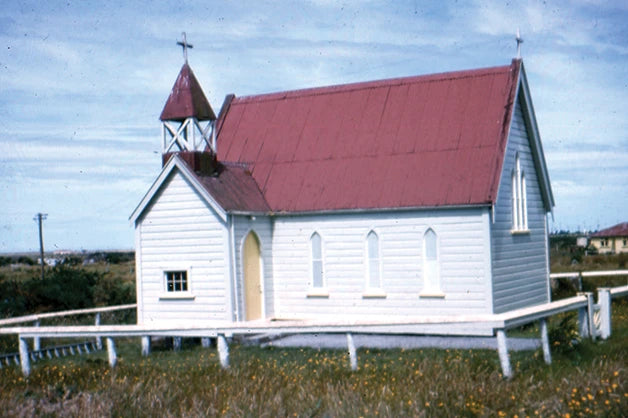
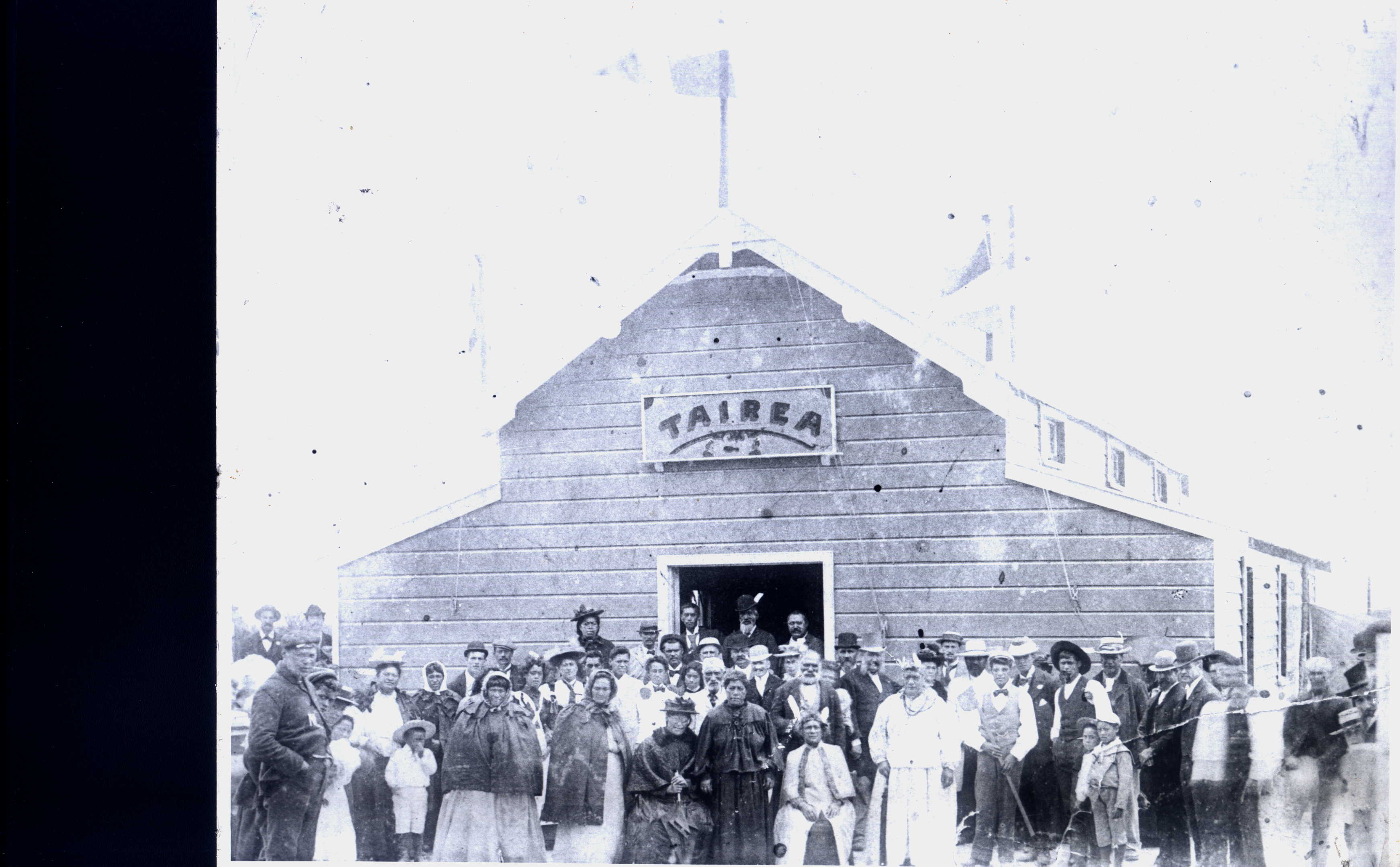
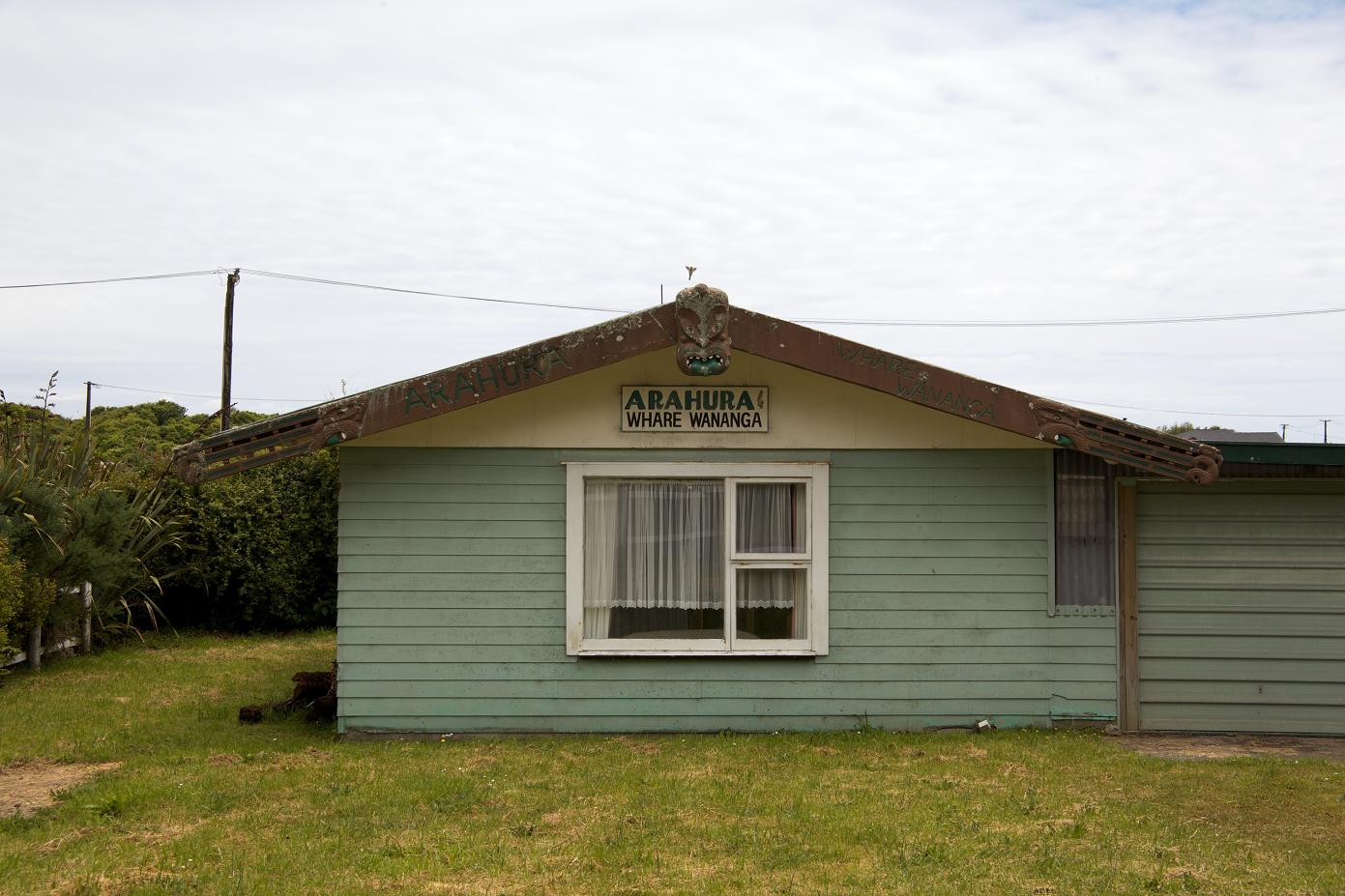
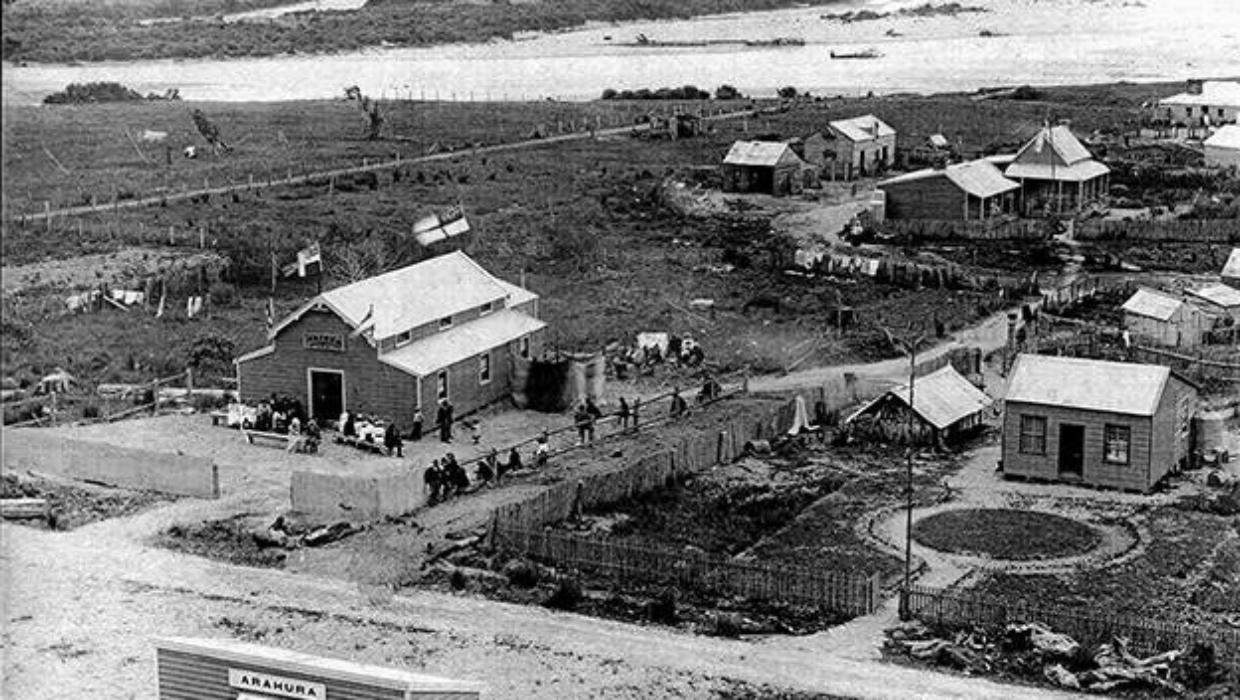
Images: St Paul’s Māori Anglican Church at Arahura, Tairea Rūnanga Hall, Arahura Whare Wānanga, and Arahura Pā. Sources: Te Rūnanga o Ngāi Tahu, “Arahura dreaming”; Arahura Marae Archives; Māori Maps; History House Photograph Museum Greymouth.
c. 1870s-1989
After the pressure at Māwhera, many Poutini Ngāi Tahu whānau moved south to Arahura, where families were already living. Arahura became the centre of Ngāti Waewae life, close to the river, the pounamu, the urupā and the people.
But for more than 140 years, Ngāti Waewae did not have a formal marae. Whānau gathered wherever they could: in the church, the hall, the school, homes, hotels, and later the whare wānanga.
One of the first communal buildings at Arahura was St Paul’s Māori Anglican Church, opened in 1871. It became a place of worship, gathering and community life for both Māori and Pākehā in the valley.
In 1897, Tairea Rūnanga Hall opened near the present site of the Arahura Whare Wānanga. It was used for hui, tangi, concerts, dances and community events before later falling into disrepair.
Arahura is remembered as a living pā, a place of gardens, fruit trees, whānau, swimming in the river, church on Sundays, kapa haka, tangi, school, and everyday community life.
In 1955, Arahura Māori School opened in the pā, becoming a true hub for whānau until it closed in 1965. Meetings then continued in homes and other local spaces.
In 1989, the Arahura Whare Wānanga was built through the government-funded Maccess scheme. Whānau cleared gorse, cleaned public areas, gathered resources, supported kaumātua and built the whare in stages. When it opened, it finally gave Ngāti Waewae a dedicated place to meet, serving as the marae until the current Arahura Marae was built.
This is the ahi kā of Ngāti Waewae: even without a formal marae, our people kept gathering, serving, teaching, grieving, celebrating and holding the pā together.
2006-present
After Māwhera, Arahura became the heart of Ngāti Waewae.
For many years, whānau gathered wherever they could - in homes, churches, halls, schools and the Arahura Whare Wānanga. The dream of a true marae lived for generations before it was finally realised. Te Karaka records that over 140 years, Arahura whānau gathered in buildings from a church, to a hall, to a school, and then a whare wānanga.
In 2006, land overlooking the Arahura River was gifted to Ngāti Waewae by the Riki Te Mairaki Ellison Taiaroa Trust. Māwhera Incorporation surrendered its lease so the land could be gifted to the rūnanga.
The whare tipuna Tūhuru opened in 2014, giving Ngāti Waewae a marae they could finally call their own.
Today, Arahura Marae is our standing place. It is where we gather for hui, tangihanga, celebration, learning, decision-making, manaakitanga and connection.

Image: Tūhuru te Whare Tīpuna

Image: Poutini Ngāi Tahu at Hui-ā-iwi ki Kaikōura 2024

Image: Arahura Marae Opening 2014
1991-present
Ngāti Waewae are still here.
Our people live on the Coast, across Aotearoa and around the world. But our connection remains anchored to Arahura, Māwhera, pounamu, whakapapa and Te Tai o Poutini.
Today, Te Rūnanga o Ngāti Waewae carries our voice forward. It supports whānau, protects our taonga, upholds tikanga, strengthens our marae, and represents Ngāti Waewae within the wider Ngāi Tahu structure. The Te Rūnanga o Ngāi Tahu Act 1996 recognises the Papatipu Rūnanga structure and members’ entitlement by descent.
Our story is not only about where we came from. It is about what we carry now: mana, memory, responsibility, and the future of those who come after us.
“Ko mātou ngā mokopuna o Arahura, ngā kaitiaki o te pounamu.”
This page brings together Ngāti Waewae kōrero tuku iho, published Ngāi Tahu sources, local historical writing, media reporting, and New Zealand legislation. Historical kōrero should continue to be reviewed by Ngāti Waewae kaumātua, whakapapa advisors and rūnanga leadership.
Pounamu Pathway Māwhera Pā kōrero - Paul Madgwick / Te Ara Pounamu, 2024
Supports the kōrero on Māwhera Pā, Ngāti Wairangi, Raureka, pounamu trade, the battles, Tūhuru, Moroiti / Naki, Papakura, gold discovery, the Arahura Deed, land loss, Ōmotumotu / Omoto, and the movement from Māwhera to Arahura.
Te Rūnanga o Ngāi Tahu - Ngāti Waewae
Supports the summary of Tūhuru, the movement of Ngāi Tahu from Canterbury to the Arahura and Māwhera regions, conflict with Ngāti Wairangi, the final defeat in the Paparoa Range, the meeting at Rūnanga, and the establishment of Māwhera Pā as a Poutini Ngāi Tahu settlement.
Arahura Dreaming - Te Karaka / Te Rūnanga o Ngāi Tahu
Supports the history of Arahura after Māwhera, including the Arahura Deed context, reserves, St Paul’s Māori Anglican Church, Tairea Rūnanga Hall, Arahura Māori School, Arahura Whare Wānanga, the 2006 land gift, Māwhera Incorporation surrendering its lease and the long journey toward the current marae.
Ngāi Tahu Claims Settlement Act 1998
Primary legal source recording the Crown apology and the Waitangi Tribunal findings, including that the Crown did not act fairly in the Arahura Block negotiations, failed to preserve reasonable access to food resources, and failed to protect Ngāi Tahu rights to retain possession and control of pounamu. Schedule 2 records the Arahura Deed date and signatories.
Ngāi Tahu (Pounamu Vesting) Act 1997
Primary legal source confirming that Crown-owned pounamu in the Ngāi Tahu takiwā ceased to be Crown property and vested in Te Rūnanga o Ngāi Tahu. It also records the intention to vest pounamu within the Arahura River catchment in Māwhera Incorporation.